Ok so the song this week is Jay Z but is on a tape (yes a tape) that I bought here and work out to in my house, and also describes a lot about how I’ve been feeling recently (more on that later). Ok so the update out here in Sierra Leone…
So we got back from the Christmas break and I had some resolutions (I will not call them New Year’s resolutions but like resolutions for the new term) including exercising regularly (overwhelmingly women gain weight in the Peace Corps because of the increase in carbs and I have sadly not been an exception), eating cereal (quite an expensive habit in Sierra Leone), more protein and fruit and less carbs if possible, and also focusing a lot more energy into my classes and making my classes run well instead of trying to do too many other programs that staff members and other community members weren’t super supportive of anyway. Some changes in the classroom that have actually made class way more effective: a larger focus on classwork with student aides to help correct others’ work, groupwork competitions when I finish a topic to review that topic, optional homework assignments that are more challenging then classwork with optional Saturday help sessions, and an increase in demonstrations and hands on activities whenever possible (this all obviously means slowing down but there is already no chance to finish the syllabus anyway, so might as well make them understand what we do cover). That’s all been working pretty well actually. We started (using all those techniques) doing ionic and covalent bonding in SS2 Chemistry and the students were actually really interested and really motivated. Also the SS1 students got the results from their exams and so have finally joined us at school this term. SS1 Chemistry is over 100 people, which is a challenge every time but has been going better than expected as of right now. Like I said before I’ve been focusing more on making my classes go as well as possible and not focusing on outside activities (which will be explained more below). I also started a school club to talk about Sierra Leone and the United States: similarities, differences, challenges and advantages of living in each country, and having pen pals with US students through the Peace Corps World Wise Schools program.
So that was the update at school until we went on strike about a week and a half ago. The Peace Corps is inherently a non political entity so we have to do our best to not look like we are taking sides, not talk about political things, and just try not to get involved (or even give anyone the option of mistakenly thinking we are involved). Because all teachers are striking I am also not teaching in order to preserve my relationship with my colleagues and my standing in the community. In a nutshell the teachers union has been negotiating with the government for an increase in teachers salaries since the school year started without any changes yet. It is not a country-wide strike and is isolated to Kenema district (where I am placed). I don’t have any idea how long the strike will last so I don’t know when I will be back to work at the school. For now I am just spending time with friends and neighbors, exercising, reading, and hanging out (and trying to get updates without seeming overly involved). So that’s the situation for now.
The other biggest development since IST (In Service Training) in December is just a change in the way I view my role out here. First I am way more accepting that this is my life, these are the challenges, these are my friends, and this is what is going on so I need to fully wrap my head around it and get going. Also I was thinking about my frustrations and trying to pinpoint exactly what it is about Sierra Leone that makes it more challenging fundamentally than being in the United States. Honestly for every ridiculous thing someone does here, there is an equivalent thing that people do in the United States that drives me equally crazy. So what are the big differences? I came up with a few things: 1) The extreme annoyance of people trying to marry you all the time and everything that comes with managing those situations, 2) Having to be culturally sensitive when I see things that I don’t agree with, and 3) Being looked to as a leader and as someone that is supposed to change or “fix” the situation here. It is a completely different task in life to be viewed as someone that has the means and ability and the mandate to fix the problems and to make positive changes in their community. Being in that role makes it so much easier to be extremely frustrated with people and all the ridiculousness of people that I know is just as bad in America as it is here. I feel like it must be similar to being a politician in the United States (at least a politician that is legitimately motivated to make positive changes). So that’s it: being a Peace Corps Volunteer in West Africa is a strange mix of being a politician and a celebrity.
Ok so finally on to the title of this entry and the biggest change really in life out here. After talking to other volunteers and just observing the culture that has formed here (and asking questions and trying to make observations about how it used to be before) you begin to see the challenges in Sierra Leone in a completely different light than you did before or than expected. I think most times when we (Westerners) think about developing countries, we think about places where people have motivation but lack opportunity. I think the problem here is actually more of the opposite. That’s not to say that I think there are as many opportunities here as in the United States, but the problem is much more so with the motivation. And honestly I think a lot of that comes down to the message sent to this country by the rest of the world. It is consistently a message of feeling sorry for the people here, talking about how poor everyone in the country is, and basically doing the opposite of empowering people by creating a system where their best option is to try to get aid instead of making their own way. I actually read in a West African guide book that according to the UN Human Development Index Sierra Leone is (or at least was at the time) the worst place on earth in which to live. I will agree that according to the standards that we are used to in the Western world there are many things (medical care, etc.) where Sierra Leone is not to the level of developed countries. But I don’t think it’s ever useful to phrase it in that way (and yes Sierra Leoneans have heard about that), and I don’t necessarily even think it’s true. Yes life has challenges here but there are challenges everywhere and the views presented also have resulted in a universal acceptance here that everything is perfect for everyone in America, poverty does not exist in America, and basically America is heaven and Sierra Leone is as far to the other side as you will find. The unfortunate outcome of all of that is an extreme “can’t do” attitude and just general low expectations in general for what anyone can hope to accomplish or can expect from other people. There are low expectations for teachers to perform well, for students to do well in class, for people to go through life with the integrity that is necessary to start combating corruption here…and the prevailing attitude is just acceptance of this situation.
I had a discussion with my class about the power of the low expectations in their lives (inspired by an R. Kelly song that says “Just because I am a ghetto child, I wont live down to your expectations"), and told them that from now on my own expectations for them in my class are being raised. I expect them to come on time (and don’t let them in late anymore), I expect them to be respectful (and don’t hesitate to take cell phones and kick people out of class if needed), I will challenge them academically more than anyone else here will and expect them to raise up to that challenge (with the understanding that I am available and here to help them get there), and I expect that some people actually will pass their end of Secondary School exams in my class (to give you an idea in Sierra Leone less than 4% of students passed the Chemistry exam last year…yes less than 4% in the entire country). A majority of the students have responded really well to the challenge and I think that is one of the reasons classes have been much improved this term (before the strike of course). I guess my goal as a Peace Corps Volunteer now in Sierra Leone is to try to show people that they themselves are capable of making positive changes in their own lives. Being a person devoted to motivating others in a place with really low motivation is definitely not an easy task or one where you see an outcome immediately (or ever), but at least now I have a clear understanding of the task and in my mind the goal of being here.
I had a discussion with some teachers at the other secondary school in my town that started as a comparison between living a city life and an agriculturally based village life. We were debating which type of life is better and why, and the challenges and advantages in each life (Blama is definitely in between the two and people can kind of live either life in Blama). After some discussion we decided that neither life is inherently better, and that both have pros and cons and that different people will likely prefer each life. It isn’t a perfect analogy but it led to a discussion comparing life in Sierra Leone to life in America, and I was trying to make a similar argument. I was trying to say that there were pros and cons to each, and that believe it or not there are things about life here and about the culture here that are fantastic and make it at times a better place to live (a radical idea when most people believe America is perfect and their past cultural life like the traditional religion is almost looked down upon), specifically talking about how friendly people are (I will never in my life here worry about being lost because you can ask anyone for help and most times they will even argue with each other over the best advice to give and then take you wherever you are going) and how much time you have to spend with friends, playing games, talking, watching films and football (soccer) games, listening and especially dancing, drinking palm wine, etc. At the end of that discussion we decided one of the worst things that has happened recently in Sierra Leone is the outside world telling them that they are poor and the life they live is something that is to be pitied, and everyone here accepting that view.
So that brings me back to the title: “With a little ambition just what we could become here…”
So I know it was kind of a heavy entry today, but it really has been great to understand so much more of why people act the way they do (not that I am anywhere near knowing everything about that) and how I can try to function inside that to promote positive changes out here.
Ke ta mia,
Konya
Friday, February 11, 2011

Saturday, December 25, 2010
“Because e no easy eh, ooooooo….”
Ok so this is another Sierra Leonean song (“E Nor Easy”) that sorta represents how things have been lately (and another personal favorite of mine out here…can you tell I like the local music?). The Peace Corps warned us that around 6 months many volunteers experience a dip emotionally, and that definitely has been true for me and some of my good friends here in Sierra Leone. It has been a combination of a lot of things. A lot of us have dealt with some minor but annoying health issues that make it just a bit harder to go about daily life. For me that coincided with running a little low on patience and resulted in a rough period of time. Luckily the term ended not too long after that and I headed out to In Service Training and then to Freetown to celebrate Christmas with some good friends at the beach out here…ya pretty much just in the nick of time. I feel like now I will be going back to my village rejuvenated and hopefully ready to keep on trying to do the best I can do out here.
So let me give you an update with school. I ended up dropping my 3 person SSIII Physics class (the students weren’t coming and we’re offering more classes than they had to anyway) and split my SSII Chemistry class into a more advanced 35 person class and a 60 person class that I move slower with. That strategy has worked fantastically for the 60 person class, and those students are much more engaged and focused in class and learning slowly how to actually solve problems. The advanced class has been acting out a bit and I think I will be working more on group projects and challenging questions with them to try to engage them better. Also the SSI students just came towards the end of the term (they had to wait to get the results of their exit exam from Junior Secondary School) so SSI will be really starting next term. I will have SSI Chemistry (which will be above 100 students) and SSI Physics (likely around 40). It will be a project for me next term to try to gauge the abilities and classroom management situation with that class and try to come up with a strategy for how to manage them.
Also next term I hope to be working on some other projects with my school. I want to slowly incorporate more labs into class and encourage other teachers to do the same. I also want to do a teacher training to help teachers know how to use textbooks as references and to write their own lesson plans. Besides that I am trying to start a girls football (soccer) team and help with the school brass band as time allows. And (you thought I was already busy enough right?) my students are starting correspondence with a school in Illinois through the World Wise Schools program, and I am working with other Peace Corps Volunteers to plan a girls conference for some of our most promising female students. Yeah its gonna be busy…My main focus with all of these projects is to help the school better utilize the resources it already has. One problem that most of the Peace Corps Volunteers have seen is that being in a post-conflict country that is now peaceful means Sierra Leone has gotten a lot of aid and international attention in a very short time period. It seems like that has encouraged a culture of asking for aid (whether monetary or resources from outside) without a lot of thought about whether or not those materials are needed, how they can be used, and who will help to sustain them. What people focus on is how to get more materials, not how to use what is already available. What a country like Sierra Leone really needs (or seems to need right now) is building up the capabilities of the people themselves, with specific emphasis on using the resources that are available in the country or can be sustained without additional resources. All this needs to be done in a way that encourages thinking and discussion about the country holistically, in terms of what type of country Sierra Leone is aspiring to be. The impression we get from people here is that they fully believe that America is a perfect place and exactly what they should aspire to as a country. I personally believe there are many great things about this culture and this country that would be lost in that process, but not a lot of higher level discussion is going on about where the country is going and what that means for the history and future of Sierra Leone.
Ok so I think you can see a bit of where my head has been recently. One thing that has been really valuable about the Peace Corps experience is that I’ve had the time (and just such a drastic change in lifestyle and surroundings) that I can think about big picture things in a way that I never could have if I had never lived outside of the United States. I can see the things that are not perfect about America, but maybe more importantly I can recognize the things I really love about American culture and see my own place in America more clearly. In case you’re wondering I’m still not sure what I will be doing after the Peace Corps but the picture gets clearer as time goes on.
I want to make sure to say that it hasn’t all been frustrations here (and honestly even those frustrations have been tremendous learning experiences). I’ve had some great talks over poyo (palm wine) and Guinness with the local Reverend Father, watched football (English Premier League, go Arsenal!) games with my Mende teacher and some other friends, attended a local dance put on for teachers after the term ended, seen some beautiful scenery (especially a great bike ride recently to Kenema for the day), sang and danced with the neighborhood children a lot(who a former PCV correctly said are the best and worst part of service!), and had some fantastic times with other Peace Corps Volunteers. I mean spending all of Christmas Eve at an empty beach in tropical Africa followed by Christmas lunch and drinks with the US Ambassador and his family? Yeah, things could be worse… :)
Ke ta mia [that is that],
Amanda
“Mi yay de watch-o, eh-eh-eh mi yay de watch-o, i de watch-o”
This was written at the end of October...just fyi:
Ok so for the first time I’m starting you off with a song in Krio rather than English. It means “My eye is watching, my eye is watching, it is watching”. I’m pretty sure it’s by a Sierra Leonean artist called Innocent, so if you get a chance go check out the song (it’s an awesome and really politically conscious song). Anyway I chose that song today because it pretty much sums up the beginning of the school year for me. Basically the beginning of the year has been me trying things and then watching the students to see if anything I do is actually working.
I knew there would be challenges going into the school year, but I think the challenges are different than I first expected. Or maybe put another way, I thought I would be able to settle into a routine and teaching style quickly that would help me deal with teaching in Sierra Leone, but each class is having unique challenges, and I have to learn what works for each class individually. Let me try to explain. I have a 3 student SSIII Physics class (that have to sit their secondary school exit exam this year), a 25 student SSIII Core Science Physics class (also sitting the exam this year), a 50 student SSII Core Science Physics class (not sitting this year) and a 85+ student SSII Chemistry class. The SSII students are fantastic at sitting and taking notes quietly (in a way that no American class would ever be) because that is the normal class routine here (students don’t have textbooks so class usually consists of taking notes). While they are great at taking notes, they have very little practice actually using their notes to answer questions or solve problems. They also are very difficult to control if you do anything with them at all besides note taking, which is basically all the activities that lead to any real learning. The SSIII’s surprisingly couldn’t be more different. They are bored quickly by note taking and complain often. They are more accustomed to answering questions and will usually try to solve problems, although their math is definitely lacking. They also don’t come to school exams because they think the only score that matters is their exit exam, while the SSII’s have more students on exam day than any other day. So I’ve been spending most of my time revising my teaching ideas and styles to try to fit each class’s needs and capabilities.
I decided on a few areas to focus on with all of my students. I want to get them to understand how to use their notes to answer questions and solve problems, then with time show them how to write their own questions to help study for exams. I want to spend time with them on strategies for reading and understanding exam questions. Finally I want to find a way to get these kids to understand how to use textbooks. We just opened a library this school year that has fantastic physics books and also some decent chemistry books. I was excited at first that students would have books to use and was encouraging them to supplement class with these books, until I realized almost no one has ever used a textbook before and they literally don’t know how to use them. So anyway now you have an idea of my changing school strategies and how things have been going.
The last month and a half has been mostly busy with school, so there isn’t much of an update besides that. I am continuing Mende lessons (oh so slowly making progress there) and continuing to build relationships with community members. I also decided to pay my neighbor to cook for me because cooking is just too much work here, and have really been enjoying eating and spending time with the 3 families that live next to me.
On to more serious issues. First off, just to keep you all updated, we lost 2 more Peace Corps Volunteers to Early Termination, leaving 35 here. As always I wish them luck and hope all is well with them. It is known throughout the Peace Corps that the first 3-6 months at your site are often the most challenging and frustrating, and full of big emotional swings. This is the time many volunteers find it difficult to get anything done and start to wonder why it is that we are really here or what we can honestly accomplish. I have definitely experienced all of those frustrations, and have spent much of my first few months at site thinking about what it is that Peace Corps Volunteers and aid workers in general can actually hope to (or should be striving to) accomplish in Africa. I am far from any sort of answer or even interesting insight on that front, but what has come out of this time is a greater understanding of what characteristics I really value and respect in people (across both cultures). To spare you the details, let me just give you the short list as it stands now: tolerance/open-mindedness, integrity, self-reliance (or at least striving to be able to take care of yourself without relying on others), compassion, and something that I struggle to find a good word for but is basically the opposite of feeling entitled. Something like being able to appreciate the good things in life and the good others do for you. If anyone wants to hear the long winded version of this just let me know and I’d be happy to share :)
To close out today’s update, last time I promised to tell you how I got the travel name “Paradise”. Back during September, the volunteers took a trip to Number 2 River near Freetown. Everyone was discussing travel names that they use outside of their villages just for fun (like Lady Gaga and Iceman just to give some examples) and because we are all tired of being celebrities and hearing our local names yelled at us by children all the time so we welcome using other names when outside of home. Anyway I was still without a travel name when we were heading home from our fantastic 3 days at the beach. We were riding in public transport with 2 Sierra Leoneans and I think 10 volunteers. One of the Sierra Leoneans met one of our volunteers named Evan. He (the Sierra Leonean) turned to me and said “his name is evan [he was thinking Evan’s name was “Heaven” because that’s how you say Heaven in Krio], so my name is el [hell], and you must be paradise?” Later on in the journey the fumes from the car were bothering my eyes and the same Sierra Leonean broke the silence (that is so common in public transport) to say “Paradise is crying”, which in that moment seemed a strangely poetic thing to say. Anyway, that solved the problem of me not having a travel name, and I became Paradise from that point on. I also forgot last time when I gave all my titles to include the Peace Corps Sierra Leone superlative “Lyrical Gangster” I received during training as voted by my peers, so you can add that to the list from last time.
That’s all from Blama, Sierra Leone for now. The next time you hear from me we will have completed the first term of school and I’ll be meeting up with all the remaining Peace Corps Volunteers for In-Service Training (IST), hopefully followed by some sort of outing at some beach somewhere in Sierra Leone…until then I hope all is going well and take care. -A
Sunday, September 26, 2010
"This is the life, everyone has to be somewhere. I am here..."
Ok so back to using songs as the title for my blog entries. If you don't recognize that one, it’s from the movie Dangerous Minds. I suggest listening to it or even watching the movie if you want to know why I feel like it describes life at this moment.
As a side note I easily could have called this entry “and then there were 37”, but that’s old news now and isn’t what I want to focus on. It hit me hard at first that another volunteer chose to leave, but I was strangely encouraged when I found out the original Group 1 from 1962 was exactly 37 education volunteers. We always talk about how we are the second version of Group 1 since we are the first volunteers since 1994, so it’s fitting that we have the same amount of volunteers in the same sector.
Ok on to the update. First of all, I’m sorry it has been so long without an update. I’m in my village now and have to travel to a big city to get to internet, and while that isn’t far away, I’ve been thwarted in my last few tries to use the internet (place wasn’t open, not enough time for travel, internet broken, etc.). I’ll try to be updating every month or so from here on out. Also along those lines, I really do want to hear from all of you. I’m sure you probably feel like nothing has changed at home, but it is really exciting to get news from home, even when it seems like something boring or unimportant to you. So please don’t feel shy about sending out a letter or shooting me an email update. I’ll respond back to you using the same method you use.
I have just finished my first month as an official Peace Corps Volunteer. This first month was time before school starts to get “integrated” into your community. That means getting to know people, establishing yourself as a member of the community, trying to learn community strengths and potential community needs (for later secondary projects), preparing for the school year, and whatever else you decide (learning to cook local foods, learning the local language, etc.). I’ve had many conversations with people about how this integration thing is tricky business. First off, in the beginning you are overwhelmed by how much you feel like you need to accomplish, but how little you actually have planned for each day and how to make bring those two things together. I also have the added challenge of being in a big town for a Peace Corps Volunteer at around 10,000 people, which makes it pretty tough to learn “everything there is to know” about this place…
Ok so I won’t keep you in suspense any longer, here are some things I did in this past month:
• I started Mende tutoring with a local middle school Mende teacher. We spent most of Peace Corps Pre-Service Training working on Krio, which is the lingua franca for the country, but the area where I am is heavily Mende speaking (People only really speak Krio for trading or other business ventures and a combination of Mende, Krio, and English at school). The language is coming along very very slowly, but its definitely coming along. Nya gaama Mende yie klo klo (I’m learning the Mende language slowly)…
• I’ve been walking around the town randomly just talking to people and trying to get the town used to the fact that I’m around. That pretty much just means walking down streets, greeting people the best I can in Mende and telling them my name is Konya not pumui (white person), and walking over to spend time with them if they call me over with wa le (please come) or wa mu mehee me (come let us eat). Just fyi, the protocol for eating with people here is to accept it, but eat only a small amount leaving most if not all of the meat, saying you’re fed, and thanking the cook properly.
• “Keeping time” with key people so as to build relationships: my principle and other coworkers, the past Community-Teachers Association (CTA, their version of PTA) chairlady, the police commander and other officers, leaders of the local women’s organization, the town chiefs, the Christian Brothers, Christian Sisters, and Reverend Father at my school, my neighbors, etc.
• Visiting the local Community Health Center and getting an idea of what health care is offered here
• I attempted to start cooking lessons with my neighbor, but it took too much time to go to the market to buy everything, come back, cook, eat, and clean when I was trying to schedule so many other things. Now I pay my neighbor to make me food each day…
• Incredible times with the other volunteers, especially a trip to Number 2 River (where the river meets the beach) near Freetown. First time I’ve stayed in a beach house, danced on the beach, swam and especially watched the sunset over the Atlantic Ocean, and a host of other amazing things…
• Attended a workshop with the local women’s group about gender based violence
• Tagged along with a lady that works on a micro-loan program with women’s groups both in my town and in surrounding villages
• Biked around with one of my coworkers to introduce myself to the surrounding villages
• Continually preparing for school by getting supplies together, reading the Peace Corps guide to classroom management and doing exercises with a coworker, and cleaning, organizing, labeling, and taking inventory for our lab! That’s right we have a lab, with some actual chemicals and glassware
• Working with the Christian Brother on making rules for the new library that is opening at the school, complete with donations of plenty of science books that the students will be able to read inside the library
• Spending time with the “Honourable” (i.e. Parliamentary representative) for these 3 chiefdoms, who is a fantastic woman and one of the few women in government here. I’ve also spent time with the woman who is the head of the 50/50 group for the Eastern Province. That group is based in Freetown and is devoted to increasing the amount of women in Sierra Leonean politics (until its equal or 50/50)
• I’ll round off this list with spending time with the Paramount Chief for my chiefdom. He is a fantastic guy who spent 27 years in America (and got his degrees there) before coming back to Sierra Leone around 2002. We took a trip to Kenema (the district capital 12 miles down the road) and got to meet the Regional Minister (the representative for the President for the whole Eastern Region), district education officials, the LUC (second in command for the Sierra Leone Police in the district, the OC wasn’t around, neither was the mayor who we were also wanting to meet)…the most ridiculous part of that day? Sitting in on the district council meeting where they make actual decisions for the district government. We were invited to the head table and listened to the council debate how much money they would contribute to a scholarship scheme in order to set an example before asking others to contribute. Then they asked my chief if he wanted to speak, and his speech was incredible. He gave me a warm welcome, mentioned that the US isn’t perfect and poor people do exist there (which no one ever believes) but that I did make a sacrifice coming. He went on to say that they should look at my sacrifice and instead of just taking what I have to offer (and trying to marry me while I’m here) they should take me as an example to search within themselves to develop their own country. He said that it should be their goal to decrease foreign aid until it is nothing and Sierra Leone is self-sufficient. He even threw in the JFK quote (super pertinent plus JFK is the founder of the Peace Corps), and I had to try hard not to cry sitting there at the head table (seriously it was way better than I’m making it sound). Mind you this is in stark contrast to how most Sierra Leoneans think. Its too early for me to make broad comments about the culture, but let me tell you a story to get the idea across:
I was keeping time with my Mende teacher talking about how teachers here don’t always get paid, comparing the cost/education system of Sierra Leone and the United States, etc. He started discussing how the government doesn’t do enough for the people (including pay salaries) but had also been complaining about how people shouldn’t be expected to pay taxes because many can’t afford them (taxes here are 5000 Le/year, which is $1.25 although the exchange rate is misleading. The buying power is about 1 meal that could feed a small family of 5 or so). I asked him where the government would get the money without increasing taxes, and without missing a beat (and even shocked that I asked at all) he said “from you people” (Cultural note “you people” is common and not at all an offensive thing to say, even though it sounds weird to us). Again its too early for me to be making cultural judgments, but the huge NGO presence in Sierra Leone is definitely doing something to develop a culture where people expect others (especially foreigners and the government) to come in and do things for them, don’t think they can/don’t want to do it for themselves, and take very little initiative in their own country’s development…now you see why the chief’s speech to a decision making body was so moving to me.
Since I don’t want to be making broad cultural statements, and I feel its too early to be saying extremely insightful things about the meaning of life or the inherent flaws in America (just kidding, just kidding), let me close off this long entry with some interesting things that people say in Sierra Leonean English or in Krio that are just ridiculous to me, and their “cultural interpretation”.
First off, there is definitely the mark of British English on Sierra Leonean English, especially in words that sound extremely formal to me like veranda, parlor, vex, and humbug. There are also words that mean something different than how we use them, and it is a debate among volunteers whether the differences come from British English or the African interpretation, like using “revision” instead of “review”, sayings like “I want to believe”, or the hardest one for me to get used to: when people use “can” to mean “do”. For example if someone says “can you eat rice?” it means do you usually eat rice, or if someone says “why can’t you go sit inside?” it is really just a suggestion, not the attack it sounds like in American English. Some other funny things people say in Krio: most greetings start with asking someone “aw di bodi?” (how is the body?), “aw yu slip?” (how did you sleep?), or “aw yu spend di de?” (how did you spend the day? – the answer to this is “fine”, not a list of what you did that day), all of which are pretty weird to us. Last but not least, and definitely one of my favorites is “how do you see the environment?” Upon first hearing this, all the volunteers wanted to answer something along the lines of “with my eyes”, but the question is closer to “what do you think about the environment?” so the answer is whatever you are thinking about the place that you’re in.
Anyway let me finish off this long long entry with a little glimpse into what’s coming ahead. School officially “re-opened” on the 13th of September, but students file in slowly for the first week or two, so I’m just hanging out at the school in my awesome African lapa suits spending time with teachers, learning about how things run in the school, making other preparations, and “reviewing” material with the small number of students who have actually come…By next time you’ll be hearing from someone who has actually been teaching her official African classes! Well I want to believe I will be teaching by then…
In another side note, I realized recently that I am now living by myself for the first time in my life. Its strange to think that I passed this important milestone while in Africa…
Ok, in the truly Sierra Leonean way, let me sign off with all my relevant titles:
Amanda Pease
Konya Dongboi (Mende name)
Paradise (travel name, I promise to explain this one next time)
Peace Corps Volunteer, Sierra Leone group 1.2
Volunteer Advisory Committee (VAC) representative
Peer Support Network Counselor
And I’m sure many more to come once school gets going and we settle into our committees at school: I’m guessing I’ll be in the Library Committee, Sports Committee, and Performing Arts Committee to start…
Or in my standard American way of signing off:
Take care,
-A
Saturday, July 31, 2010
And then there we're 38
So I wanted to update the blog way soone but caught a cold that slowed me down a bit. There is tons to update on so I'll do my best to let you guys know what's going on.
First off we had our first Peace Corps ET (Early Termination), resulting in there only beng 38. Well that is if you don't count the mystery of Samuel, who was supposed to be number 40 but never got on the plane for DC. One of our girls really wasn't happy here and decided to go home. I wasn't that close to her so I don't really know her reasons, but it was unreal to see one of our own leave, and also to realize how easy it would be to go back to America. It seems crazy to me as I've prepared myself for a 2 year commitment to see someone leave so quickly. I'm not judging her situation, it's just really weird for me to see because it seems so far away from my life. I sincerely hope she is feeling better and we all miss her out here.
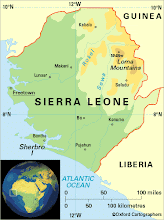
In better news, we found out where our sites are!! I will be teaching at St. Joseph's secondary school in Blama, Small Bo chiefdom, Kenema District, Eastern Region, Sierra Leone (you get all that?). It's a town of about 10,000 that's really beautiful, and nicely situated between Bo and Kenema, which are the 2nd and 3rd biggest cities in Sierra Leone. I'm right on the Bo-Kenema highway, which means traveling to and from site will be super easy. The school is also an agricultural school, so it has a school swamp (for rice) that is gorgeous! I will be teaching SS1 and SS2 (10th and 11th grade) chemistry and physics, and may pick up a math class 2nd term if all goes well.
The Peace Corps had a supervisor workshop where our principals came to Bo to learn about the Peace Corps and our role and how to best help us in that. My principal's name is Michael Samba, and he is really awesome. He's also the president of the National Council of Principals!! I also had the chance to meet some colleagues, and they all seem fantastic and are really helpful. I'm anxious to get to site and get started!
I am anxious to get started but nervous as well. We had a 2 week summer "practice" school where we really got to see how difficult it will be to teach here. Classes were crowded (up to 70 kids), classrooms were connected (so the ambient noise from the next classroom was often too much to teach through), students didn't have textbooks (so you had to balance writing their textbook with encouraging problem solving and creative thinking) just to name a few. We definitely have our work cut out for us.
Training is now coming to an end, and we will be sworn in as Peace Corps Volunteers on August 13th (yes Friday the 13th!). This strange time that is training is now coming to a close...training consisted of a crazy busy schedule, living with a host family, and doing everything with a large group of Peace Corps' Trainees, all things which will be markedly different at our sites. Everyone is feeling a mix of being excited and nervous at the same time...
That's the update for now from Bo, Sierra Leone. By the next time you hear from me, I'll be living in Blama on my own, and I'll officially be a Peace Corps Volunteer!!
-A
"Got everybody watching what I do, come walk in my shoes, and see the way I'm living if you really want to"
I kind of like the idea of starting every blog entry with a song lyric that describes my life in the moment...can't promise I'll keep it up but I'll try.
Since I gave you guys an update about day to day life last time, I felt like it would be fun to do an entry about what makes African Amanda different from American Amanda:
It is the happiest moment of life when I see a cucumber or tomato, which I definitely didn't like at home.
I greet everyone I see as I walk by in 1 or a mix of 3 languages.
I'm surprised when people aren't talking to me (and are actually talking to someone else).
I cannot remember why I ever needed socks, shoes that require socks, or a jacket.
Staying up until 11pm seems like a ridiculously late night, and sleeping until 7 is sleeping in.
I have to dance to get through the week...at least 2 nights of dancing to "dance out" the week.
I've danced in ways I have never danced before and (sorry) probably never will in the States.
I danced blindfolded for an hour in a dance meditation.
My capacity for white rice has tripled since I left.
My alcohol tolerance is exactly half of what it was at home, probably because I sweat all day and am always a little dehydrated.
Things like washing machines and microwaves are starting to seem weird to me even.
I communicate much more using just noises :)
I feel completely comfortable wearing my lapa skirt anywhere for any purpose, even as a yoga mat, sheet, or something to cover my bag to thwart tifs (thieves).
I laugh at anything that's funny...even (and especially) if it's something someone did that's funny. And yes I'm laughing AT them, not with them.
I no longer think silence is awkward, ever. In fact not much at all is awkward...
And...easily the worst thing about Africa: My voice is always a little bit gone, meaning I can't sing really at all...
Saturday, June 19, 2010
In New York: (concrete) jungle where dreams are made of!
Ok so everything about that title is true except for the concrete part. True story, I am living in New York! Ok, ok it’s New York Village in Bo in Sierra Leone, but I’ve always wanted to see New York! Except this New York doesn’t have electricity or running water or paved roads…so it’s just a little different!
So I figure the easiest way to catch you guys up is to just give you a day in the life here in New York: I wake up, go outside and brush my teeth and pull water out of the well if they haven’t already. Then it’s off to take my bucket bath which is an interesting task that I’ve come to love! It’s the only time during the day when I’m not covered in a gross layer of sweat aaaand it’s just so relaxing! Ok so after that I eat breakfast, which is usually eggs with onion and pepper and boiled plantains, then it’s off to training! The walk to the training site is about half an hour and you pretty much have to say hello to everyone along the way. That’s partly because greetings are a big part of the culture here and partly because everyone is staring at you and yelling “pumui pumui” (white person) so you may as well just say hello.
At training we have teaching sessions (and we start teaching our first students in a little over a week!), cross cultural sessions, medical and security sessions, and of course Krio (language) sessions. The days are packed full of information and real tiring, especially because everybody is tired just from trying to adjust to the climate and food. After class usually a big group of volunteers goes to the bar across the street (called Graceland) to chill and “shoot the shit” as everybody calls it. That is hands down my favorite part of the day, just decompressing with the other volunteers about how we are all adjusting and how classes are going or just talking about life here compared to in the States. We have a great group of people and I’ve luckily had no trouble making some close friends real quickly.
Then after that its back home for dinner (in Krio: A de go na house for eat) which is usually rice and some sauce with meat in it and occasionally (whenever I ask for it) some fruits or vegetables, then bath number 2 of the day (that’s right I have better hygiene in Africa than I did in the States!), then depending on the night it might be out to a bar/club called After Work that has awesome live music and dancing, or off to “Obama’s” bar to watch the World Cup games…yes there are many things here called Obama and this particular place has paintings of R. Kelly, Akon, and Bob Marley on it too!
Other things we’ve done: met the President and Vice President of Sierra Leone in a ceremony at State House, had a reception at the US Embassy, played soccer in the national stadium, watched soccer in the national stadium, got adopted by our host family, got given Mende names (mine is Konya, which literally means a woman fighter and is usually given to girls born during wartimes…it is a strong Mende name and people have responded well to it), and sooo many other things I can’t even tell it all!
Things are going pretty well in general. Of course some days are more challenging or tiring but overall things are going well. Life is busy with learning and preparing and all the madness that goes along with training. I hope all is well with everybody and I miss you guys. Wi go talk bak (We will talk later)!!!
Subscribe to:
Posts (Atom)